
What’s your vision?
20,000 m² of beachfront on Greece’s last undeveloped coast. What would you build?
Where Foreign Investment in Greek Property Is Coming From
China, Turkey, Iran, Israel, and the US now dominate Greece's Golden Visa programme. Permits nearly doubled in 2025. Here's the data — and what it means for the Peloponnese.
The thesis
Greece issued nearly twice as many Golden Visas in 2025 as the year before. Five nations account for the overwhelming majority. Each is driven by a different force — capital controls, currency collapse, war, or lifestyle arbitrage — but they all arrive at the same conclusion: euro-denominated property in a stable European democracy with Schengen access.
The capital is flowing. The question is where it lands next.
Greek property in 2025: the overview
Five nations, five different reasons
Each investor group is driven by a distinct force. Together they represent over 70% of all Golden Visa permits issued in 2025.
Capital preservation, EU residency, Schengen mobility. Nearly half of all Golden Visa permits. Economic slowdown and capital controls at home make euro-denominated assets attractive.
Currency devaluation, inflation hedging, political instability. The fastest-growing segment — Turkish investors tripled in two years, seeking euro-denominated assets and Schengen access.
Geopolitical tensions, sanctions pressure, family safety. Enhanced due diligence applies but demand keeps rising. Greece offers a European safe haven within reach.
Gaza conflict and regional instability. Families seeking a second home in a stable European country. Particularly active in central Athens renovations.
Lifestyle arbitrage — Greece offers premium coastal living at a fraction of US prices. Targeting properties above €1M, especially Athens Riviera. Demand expanding from East to West Coast.
Different reasons, same destination
A Chinese entrepreneur hedging against capital controls. A Turkish family escaping 70% inflation. An Iranian securing EU residency for their children. An Israeli with a second home in case the conflict expands. An American who realised Greek beachfront costs less than a condo in Miami.
The motivations differ. The arithmetic doesn't. Greece offers euro-denominated assets, EU residency through the Golden Visa, Schengen-wide travel, a path to citizenship after seven years, and property prices that are still 50% below comparable Mediterranean markets.
When five unrelated geopolitical forces all push capital toward the same country, the demand is structural — not cyclical.
Golden Visa investment thresholds
Greece uses a three-tier system. The Peloponnese sits in the €400K zone — half the price of Athens, with comparable coastline and significantly more upside.
Athens (Attica), Thessaloniki, Mykonos, Santorini, islands >3,100 population
The most saturated markets. Prices already at €4,000–8,000+/sqm.
Peloponnese, mainland Greece, smaller islands
Where the value is. Peloponnese averages €1,679/sqm — half the price of prime zones with comparable coastline.
All regions — commercial-to-residential conversions
Lowest entry point. Must complete conversion before application.
Same country, 5x price difference
Most foreign capital flows to Athens and the islands — the zones that are already expensive. The Peloponnese mainland coast offers comparable quality at a fraction of the price.
Why the Peloponnese hasn't been found yet
Foreign capital follows awareness. Most Chinese and Turkish investors know Athens, Mykonos, and Crete — the destinations with direct flights from Istanbul and established agent networks. The Peloponnese mainland doesn't have that distribution yet.
But the fundamentals are moving fast. Costa Navarino has invested €2.5B. Kalamata Airport is tripling its terminal and adding 31 routes. Property prices are growing 15–20% since 2020 but from a base of €1,679/sqm — still 50% below the islands.
The Golden Visa threshold here is €400K, not €800K. For the same investment that buys a small Athens apartment, you get beachfront on a coast where 44 km of sand has zero hotels. Government grants cover up to 55% of construction costs.
The Peloponnese is where the value gap remains widest. As the airport expansion connects to more international markets, the current pricing dynamic will evolve.
What this means for the Messinian coast
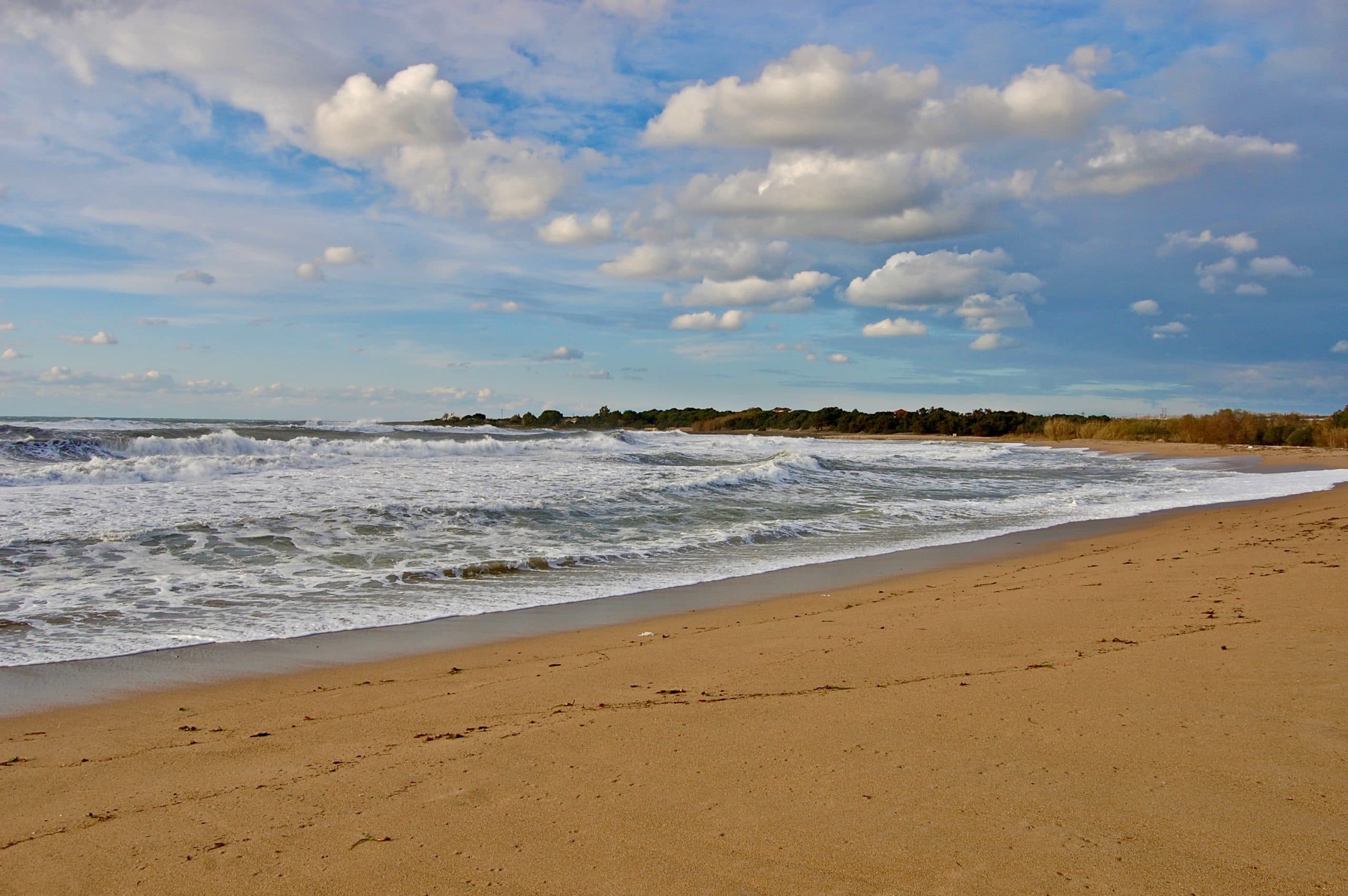
Eight thousand foreign investors bought Greek property last year. Almost all of them bought in Athens, Thessaloniki, or the islands — the markets they knew. The Peloponnese received a fraction of the flow despite offering better value per square metre, a lower Golden Visa threshold, and a coast that a €10.5 billion holding group is betting its future on.
This will change. Christopher Nolan's The Odyssey puts Messinia on 100 million screens in July 2026. The airport expansion connects to 22 international destinations. Four Seasons, Six Senses, and Waldorf Astoria are all building on the Peloponnese coast. Every one of those signals reaches the same investor networks that are currently concentrated on Athens.
When the awareness catches up to the infrastructure, the ripple effect that Costa Navarino created in the 0–15 km ring extends outward over time. The 15–30 km ring — the undeveloped Messinian coast — is where the gap between infrastructure investment and land pricing is most pronounced.
Pre-awareness pricing on a coast where post-awareness infrastructure is already being built.
Related research
Institutional Investors
Why Blackstone, Brookfield, and Fairfax are deploying billions into Greek real estate
Land Prices
How Messinian land compares to comparable Mediterranean coastal markets
Greek Property Market
The macro trends driving Greece's post-crisis property recovery
Costa Navarino Effect
How a single resort created a ripple effect across 60 km of coastline
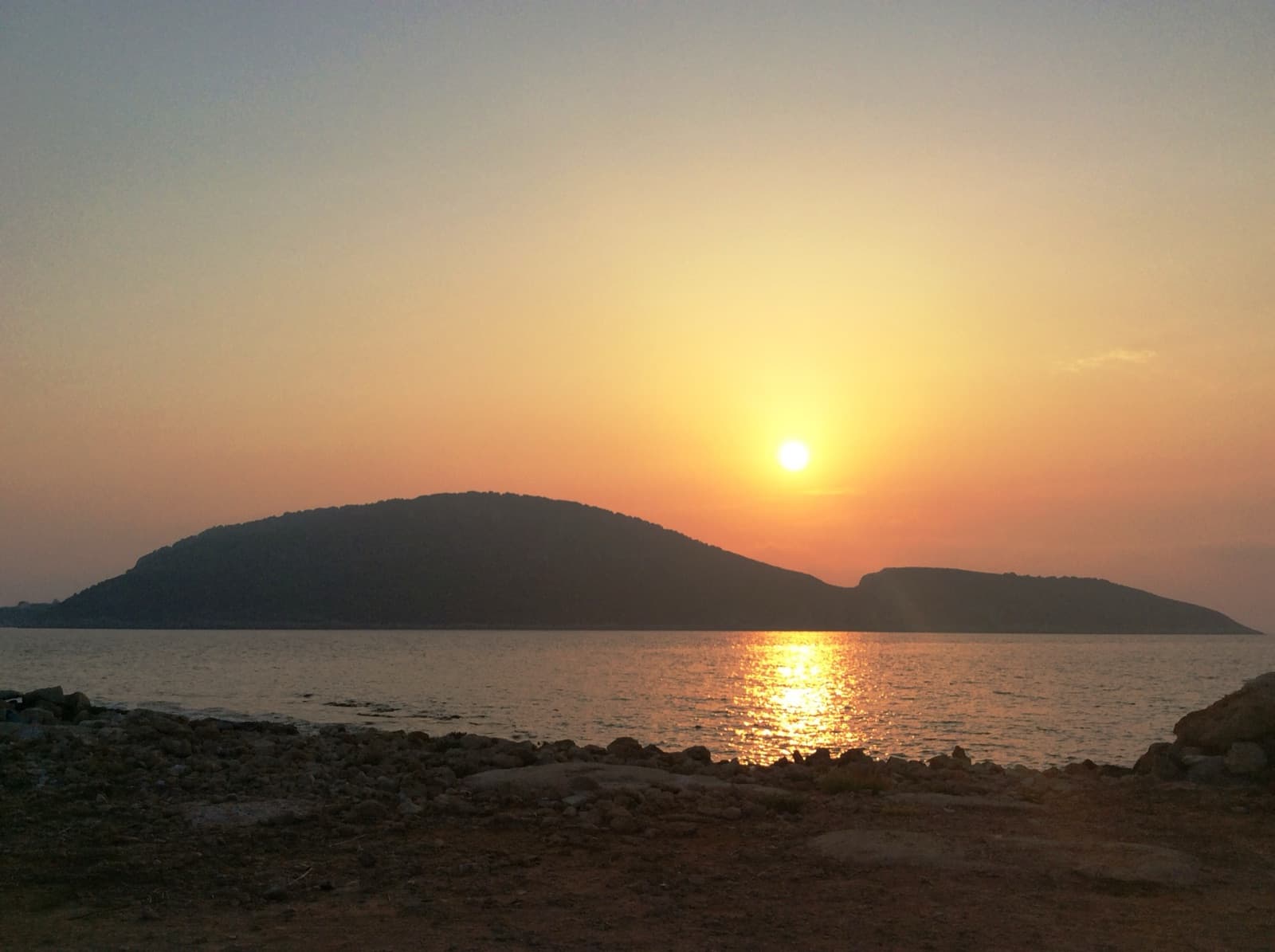
20,404 sqm of beachfront in the €400K Golden Visa zone. All clearances verified.
Lagouvardos, Messinia. The Peloponnese coast nobody has found yet.