
What’s your vision?
20,000 m² of beachfront on Greece’s last undeveloped coast. What would you build?
Why you can't build on most land in Greece right now
In 2023, Greece's Supreme Court enforced a rule that had been ignored for 38 years. Building permits on approximately 70% of Greek land are now frozen. Here's what happened, who's affected, and the one thing that determines whether a plot is buildable.
The short version
To build on out-of-plan land in Greece, your plot must front a formally recognized public road. Not a road that exists. Not a road people drive on. Not a road the municipality maintains. A road with a specific piece of legal paperwork proving it's public. Most roads in rural Greece don't have that paperwork.
If your road isn't recognized: no permit, no construction, no exceptions. Even if you already have a permit, it can be revoked if reported. That's the situation until at least Q1 2027.
How Greece froze its own land market
This isn't a new law. It's an old law that was ignored for 38 years — until Greece's highest court said: stop ignoring it.
Presidential Decree 24/31.5.1985 establishes that out-of-plan plots must have frontage on a recognized public road to be buildable. For the next 38 years, building authorities mostly ignore this requirement.
STE Olom. 176/2023 — the Plenary of Greece's Supreme Administrative Court rules that the road-frontage requirement has been law since 1985 and must be enforced. Plots without frontage on a formally recognized public road are not buildable. Period.
YDOM offices across Greece begin refusing permits. The problem: most roads in out-of-plan areas were never formally classified. They exist, people drive on them, municipalities maintain them — but they lack the legal paperwork.
The Ministry of Environment (YPEN) proposes a transitional legislative regulation. The Council of State strikes it down in Decision 350/2024 — and extends the road requirement to settlement zones too. YPEN abandons the legislative approach entirely.
Administrative Court of Thessaloniki annuls a building permit for a 5-star hotel in Halkidiki (Decision 375/2025). Message to the market: even large, permitted projects are vulnerable if the road isn't formally recognized.
Instead of trying to pass a law (which the STE keeps blocking), YPEN starts a Presidential Decree process. A PD gets preventive review by the Council of State — so it can't be struck down after the fact. Five-step plan announced.
YPEN has commissioned studies to catalog every road in all 981 municipal units. Island studies are complete. Mainland target: June 2026. The studies will determine which roads qualify as 'recognized.' Budget: ~€196M across 23 studies.
Once road studies are complete, YPEN will draft criteria, submit to the Council of State for review (3-5 months), and issue the PD. First road recognitions expected on islands, then mainland. Until then — the freeze continues.
Greece never catalogued its roads
Roads that are fine
Roads that are the problem
The irony: many of these roads are perfectly good. Paved. Maintained. Streetlights. Drainage. The municipality has spent money on them for decades. They just never filed the one piece of paper that makes them legally “public.”
Now a Supreme Court ruling says that piece of paper is the only thing that matters.
Questions & answers
Can you build on your plot?
The decision tree, simplified.
YPEN's five-step plan
Catalog roads across all 981 municipal units. Budget: €196M.
Islands complete. Mainland due Jun 2026.Define which roads qualify: pre-1977 aerial photos, 3.5m wide, connects to infrastructure.
Summer 2026.Parliamentary act authorising the Presidential Decree.
Not yet initiated.Council of State preventive review of the draft PD. 3-5 months.
Target: Oct-Nov 2026.Formal certification of recognized roads. Building permits can resume.
Expected Q1 2027.The honest timeline: The original target was 2026. It's already slipped. Islands will be first. Full resolution across all 981 municipal units could take until 2028. And for roads that don't meet the criteria — the plots they serve may be permanently unbuildable. 250 Presidential Decrees will be required to complete the process nationwide.
What this means if you're looking at Greek land
Before 2023, road access was a checkbox. Now it's the single most important factor in whether your investment is buildable.
The market is full of beautiful plots at attractive prices. Many are effectively frozen. Sellers may not tell you. Agents may not know. A plot may even have an existing permit from before the ruling. If the road isn't recognized, the permit is vulnerable.
The plots that are buildable right now — on recognized national, provincial, or documented municipal roads — are a small subset. They're scarce by definition. And that scarcity is structural: it won't resolve until the Presidential Decree completes, road by road, across 981 municipal units. For some roads, it will never resolve.
The first question to ask about any plot in Greece is no longer “what's the view?” It's “what's the road?”
Key rulings & legislation
Further reading & resources
Greek-language sources dominate because no comprehensive English-language coverage exists. Use Google Translate — the legal terminology is technical but the core facts are navigable. For professional advice, consult a Greek construction lawyer (δικηγόρος δικαίου δόμησης) or licensed civil engineer (πολιτικός μηχανικός) before purchasing any ektos schediou land.
Related research
Entos vs Ektos
Inside vs outside the city plan — how zoning determines what you can build
The Three Clearances
Forestry, archaeology, and coastal — the three approvals before any building permit
Building a Hotel
The full 8-step process from land purchase to opening night
Topografiko Guide
How to read a Greek topographic survey and what the numbers mean
One plot that isn't waiting
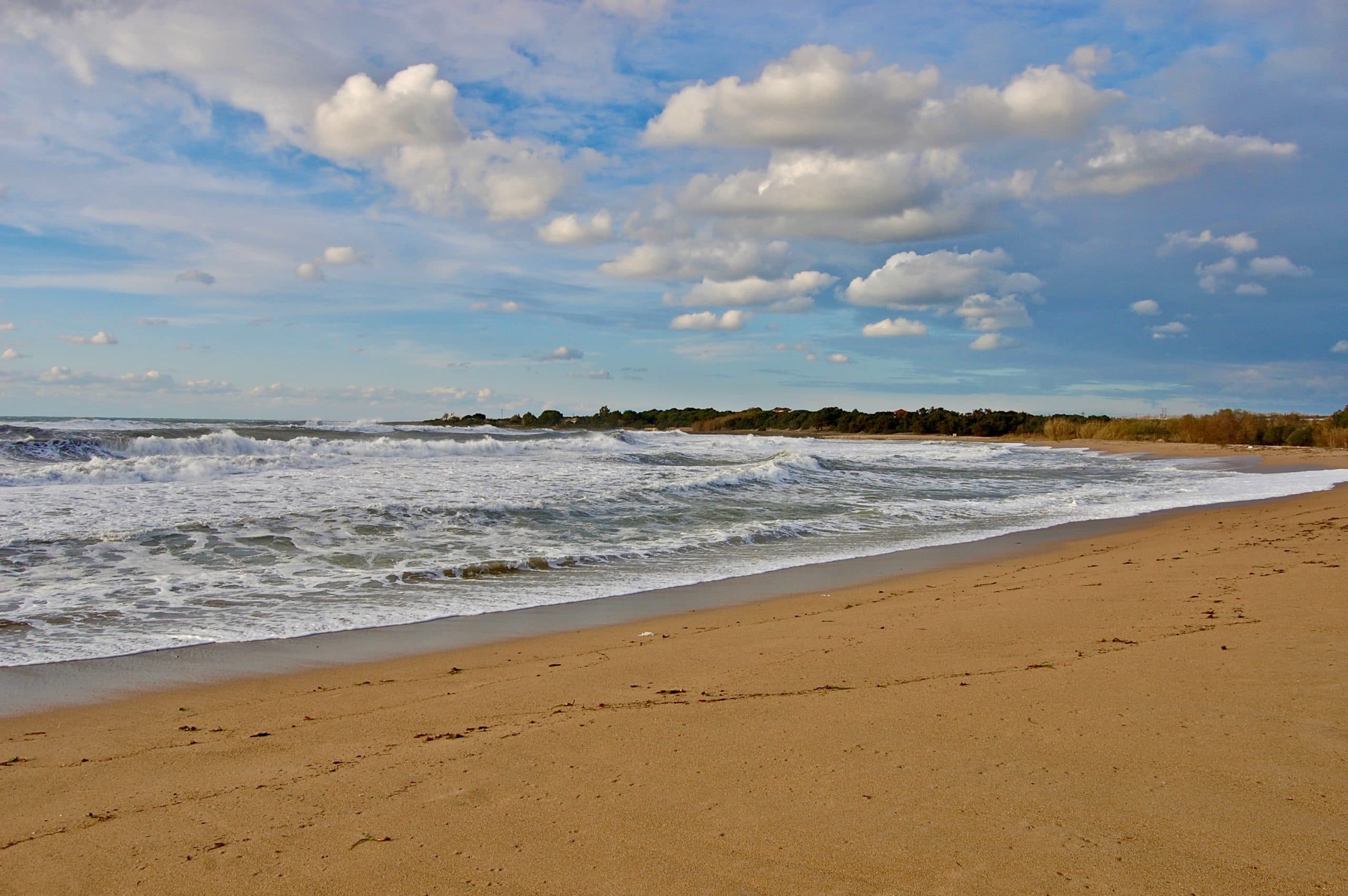
We understand this situation because we're in it. We own 20,404 sqm of beachfront land at Lagouvardos, Messinia — on an established municipal road that was recently widened and re-tarmacked. Forestry, archaeological, and coastal clearances verified. Road status confirmed.
We know how frustrating this landscape is for investors. Beautiful land everywhere, but the fine print keeps moving. If you're looking for a plot where the paperwork is already done — where the road question has an answer — we're happy to share what we know.
What’s your vision?
20,000 m² of beachfront on Greece’s last undeveloped coast. What would you build?