What’s your vision?
20,000 m² of beachfront on Greece’s last undeveloped coast. What would you build?
Building a Hotel in Greece
Permits, zoning, forestry clearance, archaeological surveys, coastal setbacks, and funding programs. Everything a foreign investor needs to navigate the Greek hotel development process — from land purchase to opening night.
The window is open
Greece offers something no other Mediterranean country does: premium undeveloped coastline, EU structural funding that covers up to 70% of your investment, a streamlined digital permit system, and a tourism market growing faster than infrastructure can serve it.
The Development Law (4887/2022) and ESPA 2021-2027 programs make hotel investment in less-developed regions like Messinia and Epirus among the most heavily subsidised in Europe. Add the Nolan film effect, Kalamata airport's expanding route network, and land prices still a fraction of Crete or the islands — the math works.
But the process is complex. Three separate government authorities must clear your land before a single brick is laid. This guide walks through every step.
The 8-step process
Each step has its own authority, timeline, and pitfalls. The first four — due diligence, forestry, archaeology, and coastal — are where most projects stall or die. Get these right and the rest is procedural.
The numbers
Construction costs have risen 20-30% since 2019 but stabilised in 2024-2025. These figures are all-in construction excluding land, FF&E, and soft costs.
Construction cost per sqm (2025-2026)
Example: 50-room, 4-star hotel
With a 60% Development Law grant: effective cost ~€4.6M + land.
Funding & incentives
Greece offers two parallel funding mechanisms for hotel development. They can be combined — but not for the same cost item. A qualified consultant can structure the application to maximise the total subsidy.
Development Law 4887/2022
Cash grants, tax exemptions, leasing subsidies, and employment cost coverage for new hotel construction, expansion, and renovation. Minimum 3-star classification required.
ESPA 2021-2027 (NSRF)
EU Structural Funds channelled through sectoral and regional programs. Covers tourism SME modernisation, digital transformation, and green transition — ideal for equipment, technology, and energy systems.
Maximum subsidy rates by region
| Region | Large | Medium | Small / Micro |
|---|---|---|---|
| Peloponnese / Messinia | 40-50% | 50-60% | 60-70% |
| Crete | 30-40% | 40-50% | 50-60% |
| Cyclades (Mykonos, Santorini) | 20-30% | 30-40% | 40-50% |
| Dodecanese (Rhodes, Kos) | 30-40% | 40-50% | 50-60% |
| Halkidiki | 30-40% | 40-50% | 50-60% |
| Epirus / NW Greece | 40-50% | 50-60% | 60-70% |
Critical rule: You cannot receive state aid from multiple programs for the same cost item. But you can split costs — e.g. construction via the Development Law, equipment via ESPA, energy systems via Exoikonomo-Epicheiro. A qualified consultant can structure this to maximise total coverage. Typical fee: 3-5% of grant amount, success-based.
Star rating requirements
Greece uses a 1-5 star system aligned with EU standards. Minimum room sizes, facility requirements, and service levels are set by Ministerial Decision 216/2015. Most Development Law funding requires a minimum 3-star classification.
| Rating | Single | Double | Bath | Lobby |
|---|---|---|---|---|
| 3★ | 14 sqm | 16 sqm | 5 sqm | 30 sqm min |
| 4★ | 16 sqm | 20 sqm | 6 sqm | 50 sqm min |
| 5★ | 20 sqm | 25 sqm | 7 sqm | 80 sqm min |
Building terms outside urban plans (ektos schediou)
Within approved urban plans or designated tourism zones, terms vary by municipality. SD can reach 2.40, coverage 70%, and height 32m in urban centres. Hotels classified as tourism facilities may partially exempt common areas from the SD calculation.
The realistic timeline
Optimistic: 3 years. Realistic: 4-6 years. If you hit forestry disputes, archaeological finds, or Natura 2000 complications, budget 7-10. The timeline below assumes a typical project with moderate complexity.
Steps 01-04 overlap — run all clearances in parallel.
Strategic Investment fast-track
Law 4608/2019 (amended by 4864/2021) offers a separate pathway for investments exceeding €20M — or €10M in specific categories. Administered by Enterprise Greece, it provides fast-track licensing with a statutory 45-day permit timeline, tax stabilisation, and enhanced aid rates. This is the pathway used by projects like Costa Navarino's expansions.
Key legislation
Where the numbers work
The highest subsidy rates in Greece. Land prices a fraction of the islands. A growing international airport with direct flights from northern Europe. The Costa Navarino effect already proven. And in July 2026, Christopher Nolan's The Odyssey puts this coast on every screen in the world.
Messinia has the longest season in the Peloponnese, the richest archaeological heritage, and the last significant stretch of undeveloped premium coastline in southern Greece. The question isn't whether it will be developed. The question is who gets there first.
Related research
Hotel Funding
Development Law grants, ESPA programs, and how to stack subsidies up to 70%
The Three Clearances
Forestry, archaeology, and coastal — the three approvals before any building permit
What to Build
Boutique hotel, villa resort, or glamping — which format fits the land and the market
Entos vs Ektos
Inside vs outside the city plan — how zoning determines what you can build
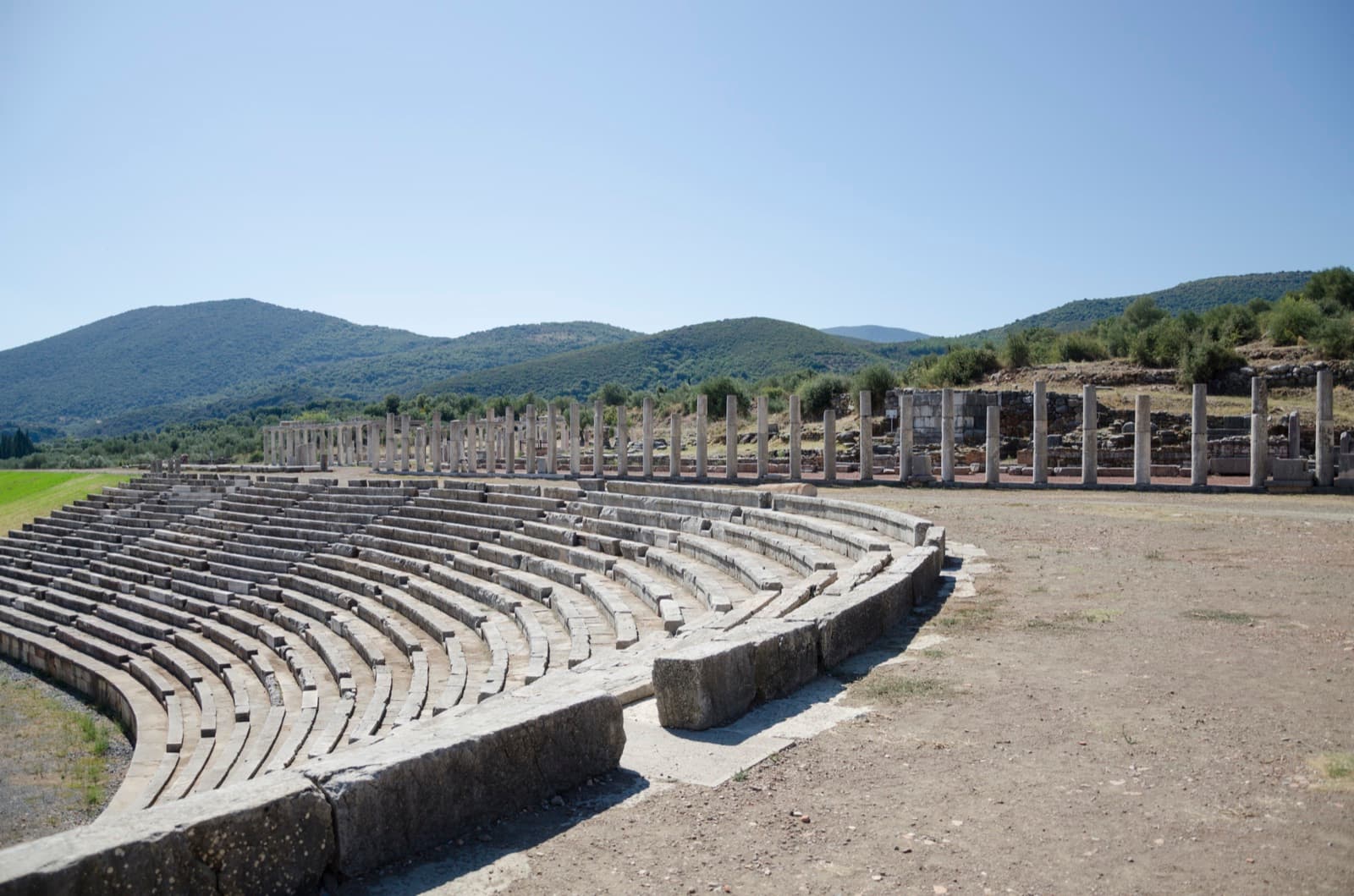
20,000 sqm of beachfront land on the Messinian coast. All clearances verified.
The opportunity is specific. The window is now.
Explore the opportunity