
What’s your vision?
20,000 m² of beachfront on Greece’s last undeveloped coast. What would you build?
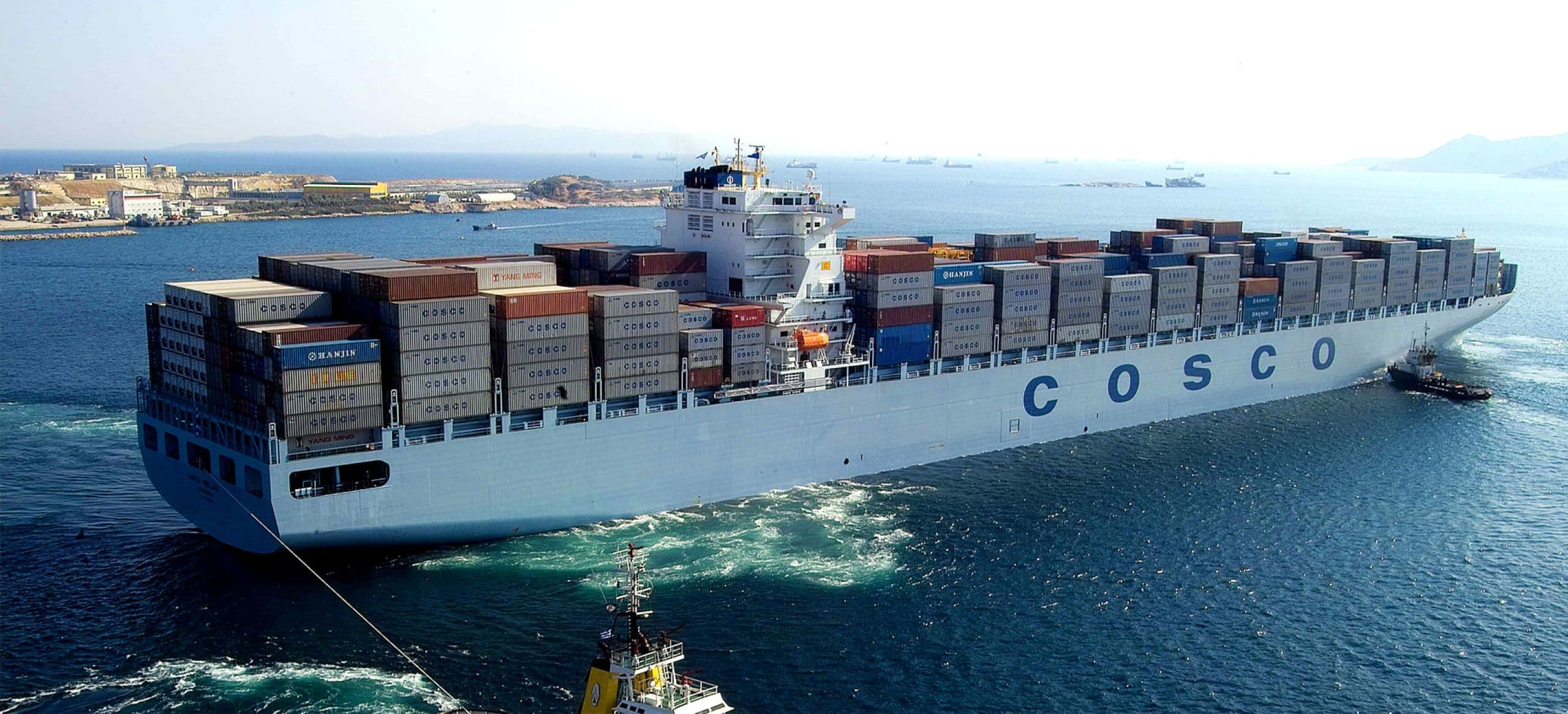
The captain who built Messinia
He was born in a mountain village with no view of the sea. He first saw the ocean at thirteen. He spent twenty-eight years turning empty coastline into the largest tourism investment in Greek history. He died eight months after it opened.
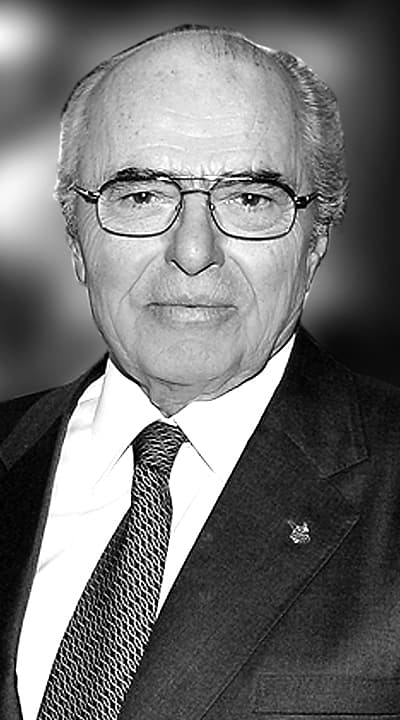
Vassilis Constantakopoulos was born on June 29, 1935, in Diavolitsi — a mountain village in Messinia, deep in the Peloponnese. His family were farmers. They had no connection to the sea. He grew up during the war and the civil war that followed, in a landscape of olive groves and hardship.
In February 1948, when he was twelve, his family fled to Athens to escape the violence. It was there — a boy from the mountains arriving in a city by the water — that he saw the sea for the first time.
In Athens he woke at dawn to sell milk to neighbours. He worked days at a button-making shop in the city centre. He went to school at night. He graduated in 1953. And on February 2 of that year, at eighteen, he boarded a ship from Piraeus for a six-month unpaid placement on an elderly freighter.
He would spend the next twenty-one years at sea.
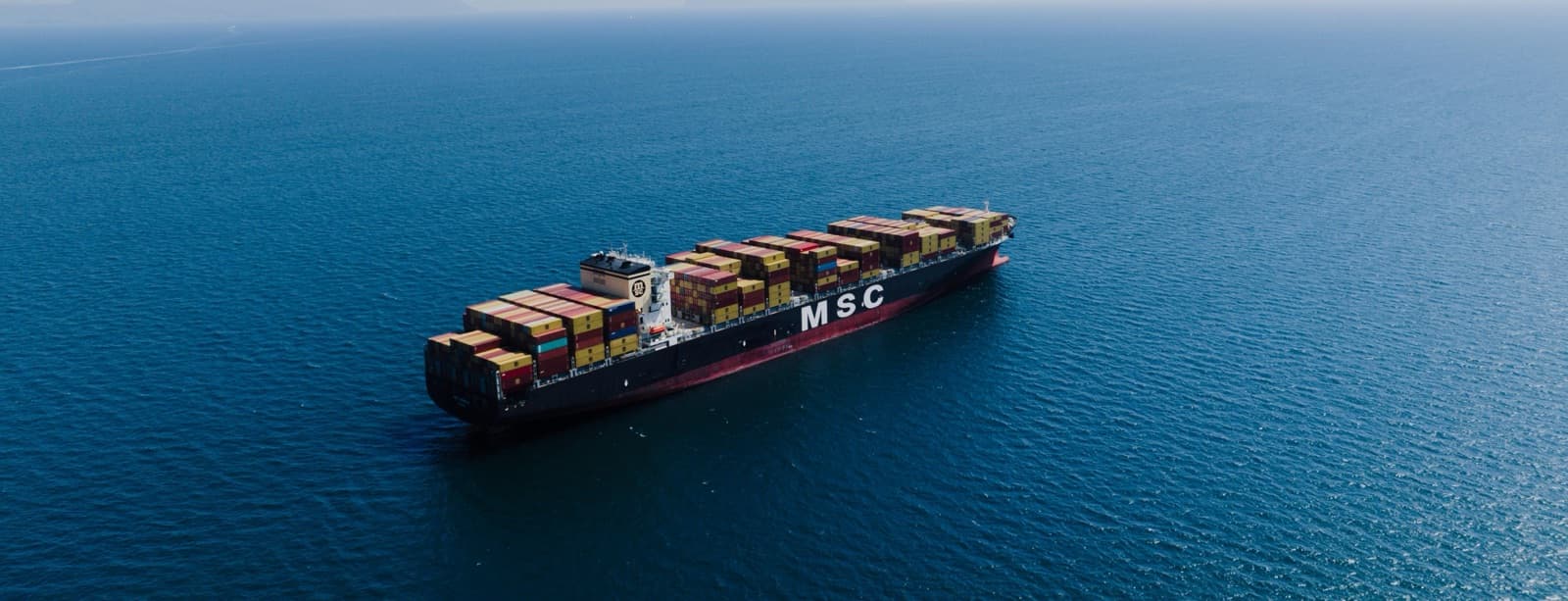
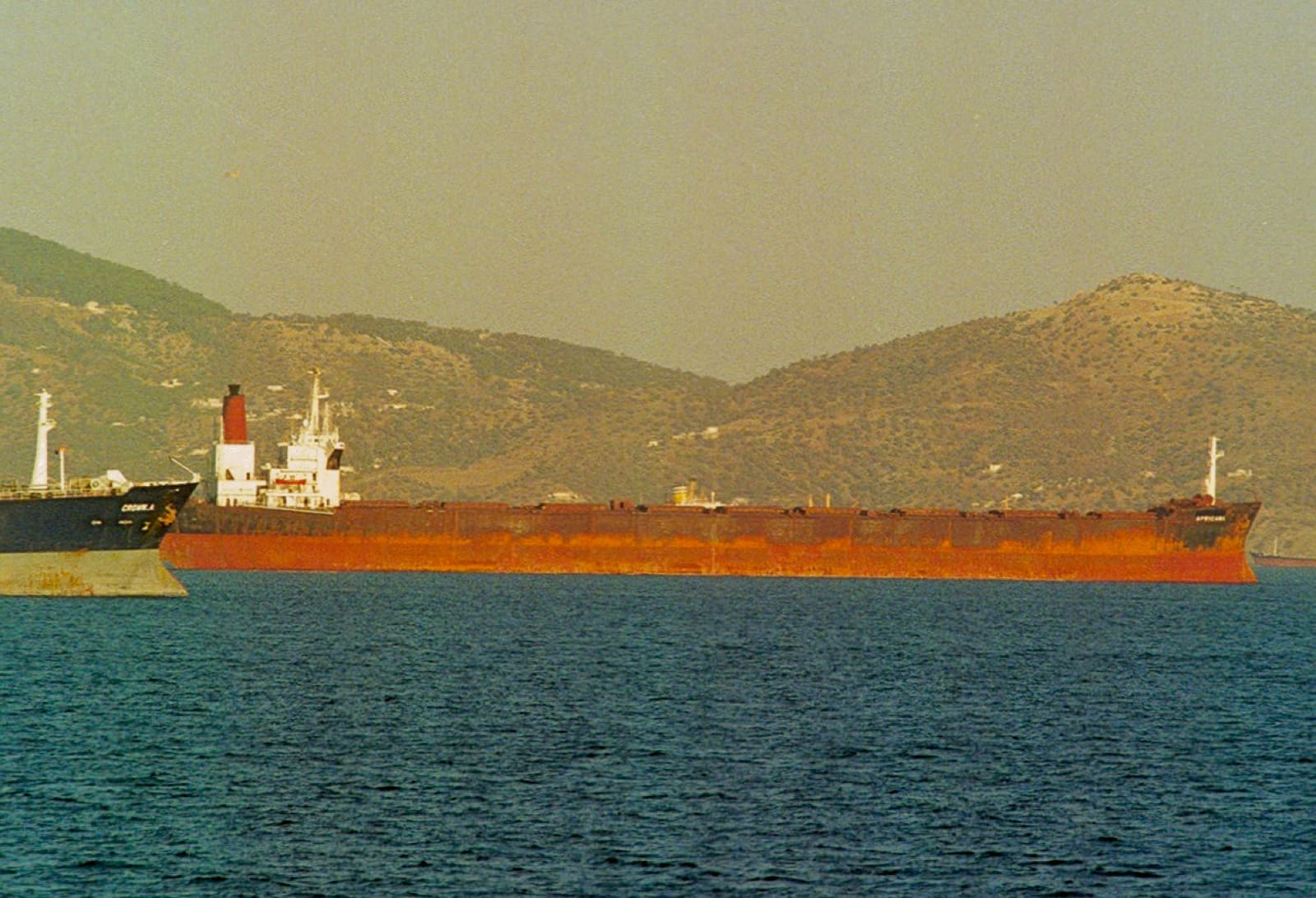
He rose through every rank — deck boy to master — over two decades. At twenty-seven he borrowed money and bought his first cargo vessel. In the early 1960s he met Carmen Kyritsis, a French literature graduate who became a flight attendant so her days off would align with his port calls. He shortened his voyages to Mediterranean routes to be near her. They married in 1964.
In 1974, after the birth of his third son, he came ashore and founded Costamare Shipping Company. His first vessel was named the Carmen.
During the 1982-84 shipping crisis, while others went bankrupt, he bought eight vessels at scrap prices. The profits funded his entry into container shipping — a market dominated by American and Northern European companies. He broke their oligopoly. Lloyd's List named him the “Greek King of Containers.” By 2007 he owned 51 ships. In November 2010, Costamare listed on the New York Stock Exchange.
But by then he had already been building something else for twenty-five years.
In the mid-1980s, the boy from the mountains looked at the coast of his homeland and saw what nobody else did. Messinia was emptying. Young people were leaving for Athens, for America, for Australia. The villages were dying. The olive groves couldn't compete with urban wages.
His vision was not abstract. He wanted to build something that would let the people of Messinia stay in their homeland. Not a resort for its own sake, but a reason for a region to survive.
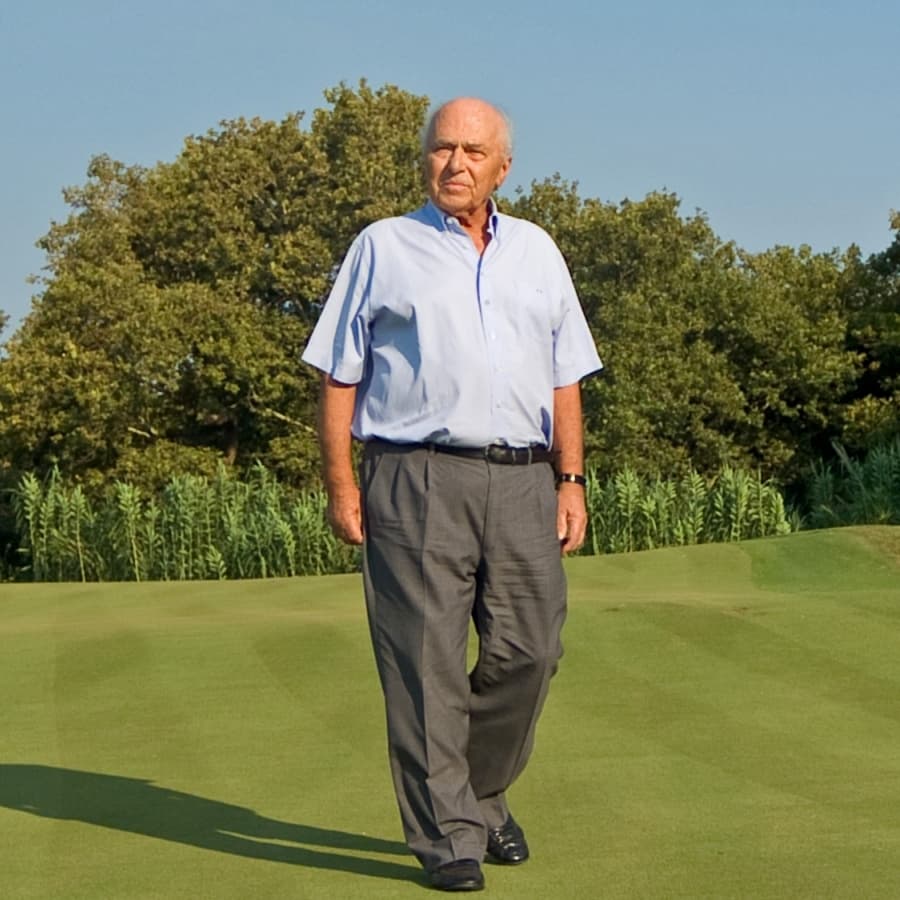
“A quality investment that would give Messinia a prominent place on the global tourist map, and allow the people of the area to remain in their homeland.”
Starting in 1982, he began buying land. Not large estates — Greece doesn't work that way. He completed approximately one thousand individual deals with local farming families, assembling tiny olive grove parcels into a single, contiguous coastal property of over a thousand hectares. It took years.
In 1997 he founded TEMES S.A. to develop the land. Then came the permits. The environmental studies. The zoning approvals. The archaeological clearances. The forestry certifications. Greece's bureaucracy is not kind to ambition. The process took another decade.
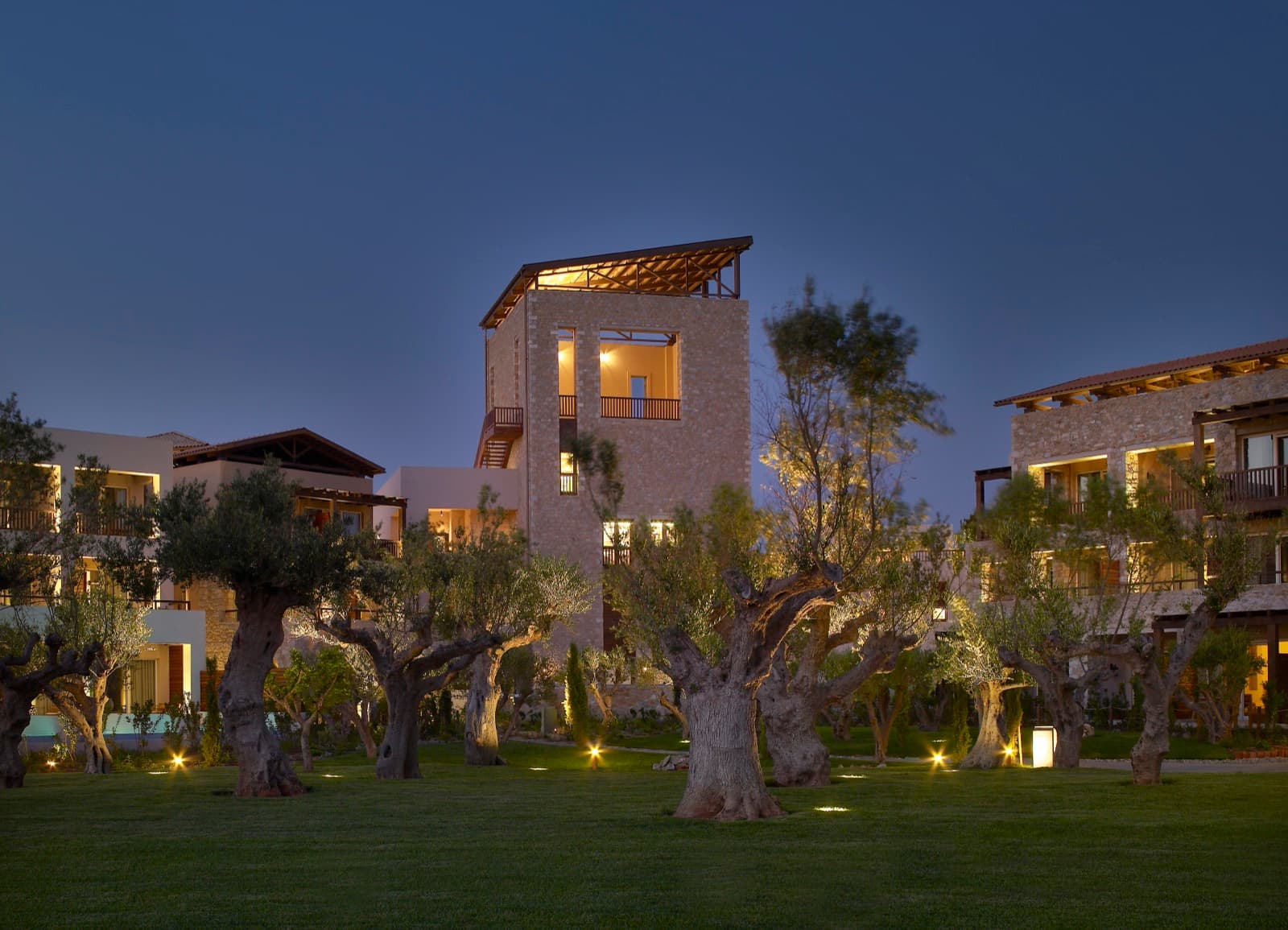
He hired Alexandros Tombazis, a pioneer of bioclimatic architecture, and gave him a single instruction: the buildings must be sympathetic to the landscape. Low-rise. Stone. No taller than the tree line. Seven thousand olive trees — including centuries-old specimens — were carefully uprooted during construction and replanted. Every single one survived. Nine thousand nine hundred more indigenous trees were planted. Over a million endemic shrubs.
On May 20, 2010 — twenty-eight years after he bought the first plot of land — Costa Navarino opened.
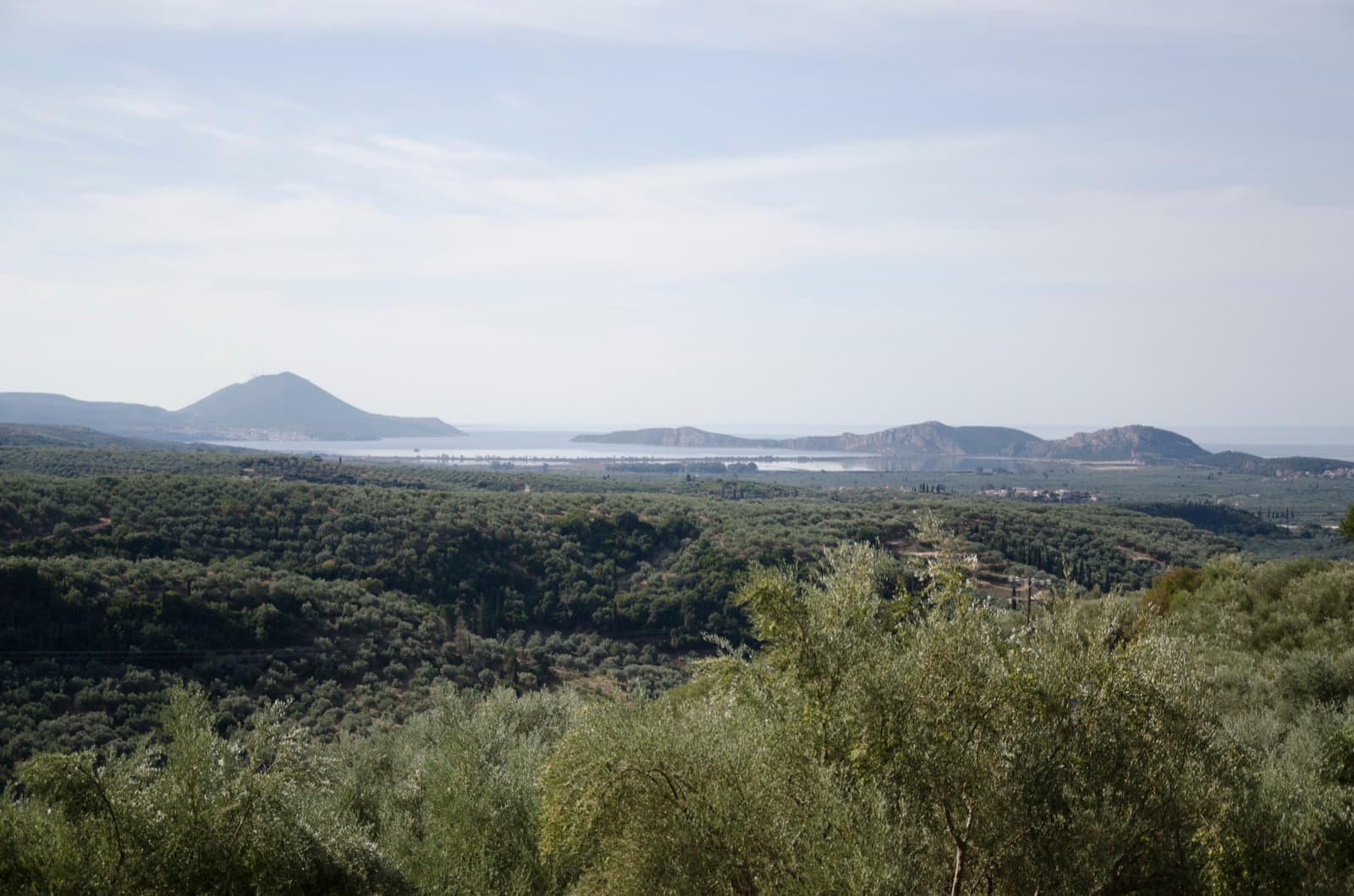
It opened at the worst possible moment. Greece was in crisis. The economy was collapsing. The world was wondering whether the country would remain in the eurozone. Nobody was investing in Greece. He was.
The Romanos and The Westin opened with 766 rooms between them, two golf courses, and an architecture that looked like it had grown from the land rather than been placed on it. The guests came. The occupancy held. The reviews were extraordinary.
In November 2010, Costamare listed on the New York Stock Exchange. The shipping company and the resort opened to the world within the same year. The farmer's son who sold milk at dawn had built two things that would outlast him.
On January 25, 2011 — eight months after the resort opened — Vassilis Constantakopoulos died. He was seventy-five.
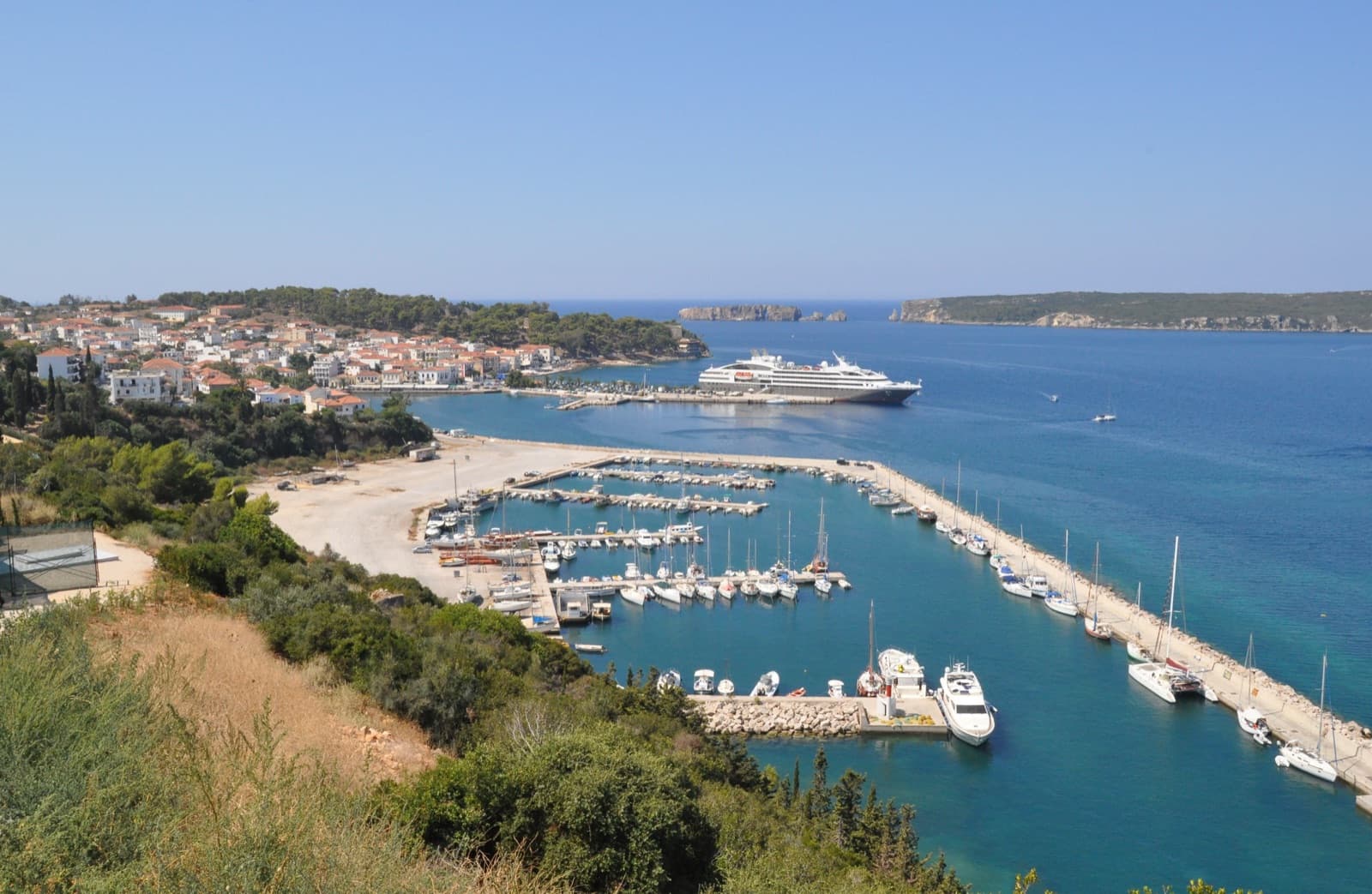
“Over the years, Captain Vassilis — precisely because of the way he worked as a human being — surpassed the narrow limits of the shipping industry and developed into national capital for Greece.”
Three sons, three domains
Konstantinos
CEO of Costamare since 1998
The eldest. Took the helm of the shipping company at twenty-nine. Expanded the fleet, managed the NYSE listing, navigated the cycles. Lloyd's List ranked him among the fifty most influential people in shipping. The container empire continues.
Achilles
Chairman & CEO of TEMES since 1997
The middle son. Graduated from the Ecole Hoteliere de Lausanne — the world's premier hospitality school — and took over TEMES at twenty-six. Built four five-star hotels, four golf courses. Acquired the Athens Hilton. Partnered with Lamda for Hellinikon. Won the Kalamata Airport concession. His ambition: to make Messinia “Greece's Tuscany.”
Christos
Founder of Faliro House Productions
The youngest. Founded one of Europe's most respected independent film companies. Produced films with Lanthimos, Linklater, Malick, Jarmusch. Created Oxbelly — a creative retreat at Costa Navarino named after Voidokilia (“ox belly” in Greek). Jane Campion among past guests. The arts arm of the family's vision.
“The company passes to good hands as the new generation is even better.” — Captain Vassilis
What he left behind
The resort that bears no man's name — he called it Costa Navarino, after the coast, not after himself. Four five-star hotels with 1,091 rooms. Four signature golf courses. €850 million invested, with €2.5 billion committed. Eleven percent of Messinia's GDP. 2,500 jobs at peak season, 55% hired locally. The Condé Nast number-one resort in Greece.
An airport named after him. A foundation in his and Carmen's name that funds scholarships, schools, and entrepreneurship across Messinia. A marine protection organisation — HELMEPA — that he co-founded in 1982, before sustainability had a name. Forty-five thousand children educated through its junior programme.
Seven thousand olive trees, carefully moved and replanted, every one of which survived. A million endemic shrubs. A coastline that looks the way it did before the resort was built — because he insisted the buildings not rise above the tree line, and the landscape remain the protagonist.
And three sons who did not squander the inheritance. The first runs the shipping empire. The second is expanding the resort, developing the Athens Hilton, building at Hellinikon, and now co-owns the airport that carries their father's name. The third produces films that win at Cannes and runs a writers' retreat on the beach their father preserved.
This is not just a story about a wealthy man building a resort. It is a story about what happens when someone with resources and patience decides that a place is worth saving. That the coast they grew up near should be more than a footnote. That the people who live there should have a reason to stay.
It took twenty-eight years. He bought a thousand parcels of land from a thousand families. He navigated Greek bureaucracy for a decade. He opened during an economic crisis. And he died before he could see what it would become.
What it became is this: Messinia went from a region people left to a region people come to. From a coast that was invisible to a coast that made the New York Times' top fifty. From empty land to Forbes Five-Star. From no airport to thirty-one international routes. From a place with no future to a place where Christopher Nolan chose to film the most expensive movie ever made.
That transformation started with one person who looked at empty coast and saw something worth building. The coast fifteen minutes north of his resort is still empty. The question is who sees it next.
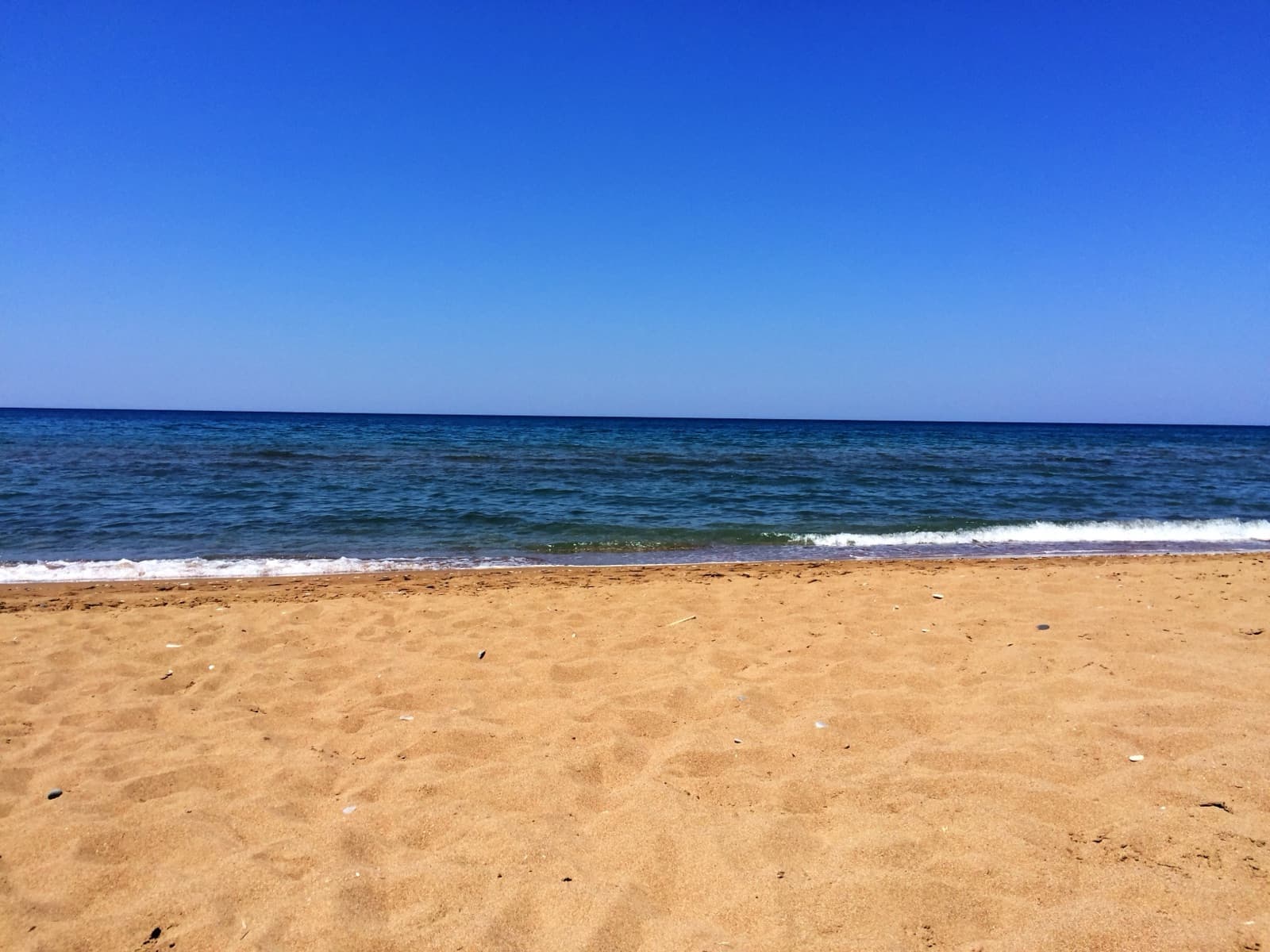
The coast fifteen minutes north.
44 km of sand. Zero hotels. All clearances verified.
What’s your vision?
20,000 m² of beachfront on Greece’s last undeveloped coast. What would you build?