
What’s your vision?
20,000 m² of beachfront on Greece’s last undeveloped coast. What would you build?
The Surf Mecca of Greece
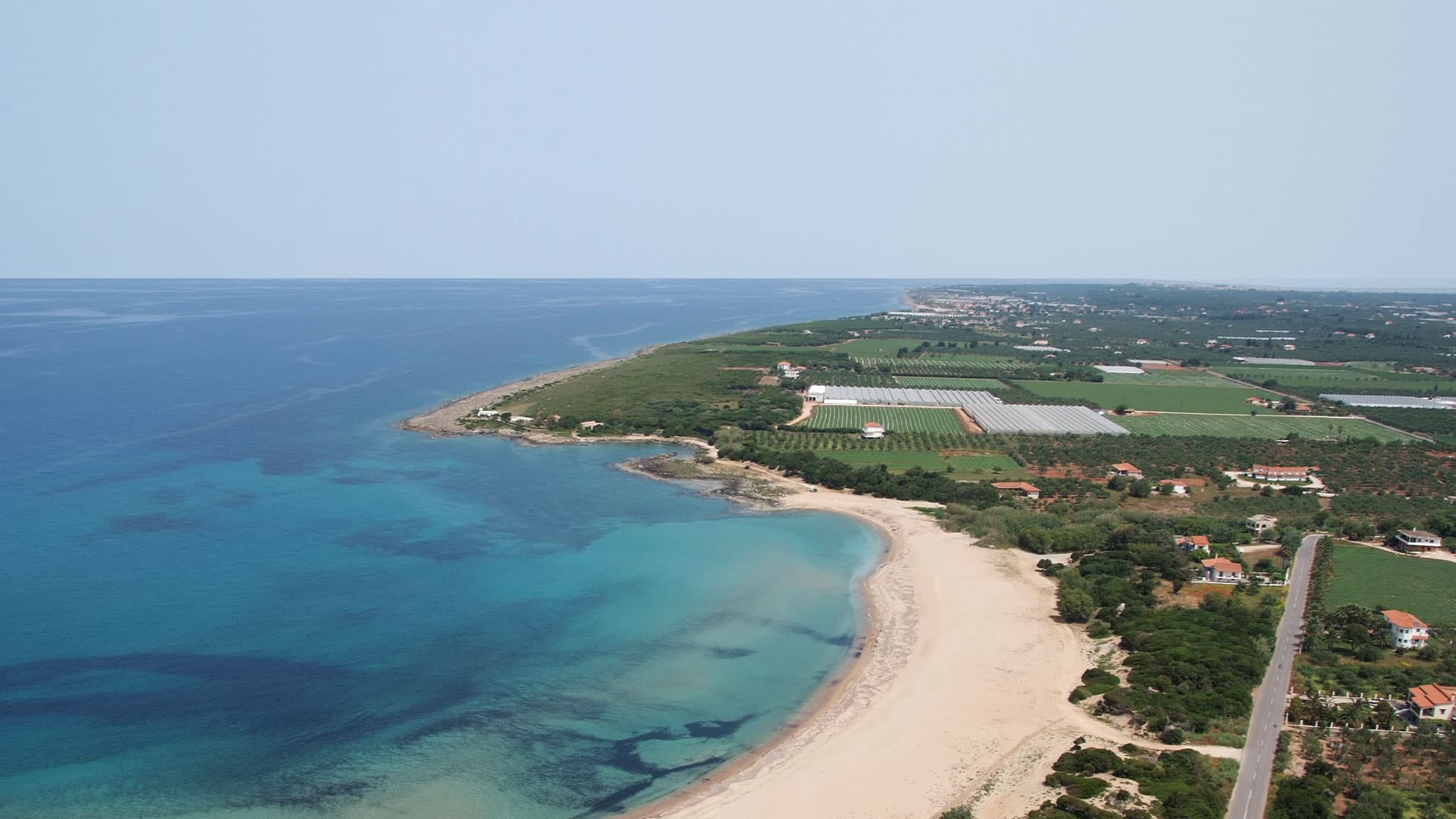
Everyone thinks Greece is calm turquoise water and windless bays. The western Peloponnese is the opposite. 44 km of sand-bottom beach breaks facing the open Ionian Sea. True groundswell. November through April. And nobody in the water.
Greece has surf. Real surf.
The Mediterranean is not supposed to have waves. That's the conventional wisdom, and for most of Greece it's true. The Aegean is sheltered, island-scattered, wind-driven. Beautiful for sailing, useless for surfing.
But the western Peloponnese breaks the rule. It faces west-southwest, directly into the Ionian Sea — which is really just the Mediterranean's open throat to the central basin and, beyond it, the Atlantic weather systems that generate swell. When winter storms track across southern Europe, this coast catches everything.
The result is true groundswell. Not the choppy, short-period windswell that the Aegean islands get from the Meltemi. Proper long-period energy that has traveled hundreds of miles across open water before it hits the sand. You feel the difference the moment you paddle out. The wave has weight.
And the coast itself is extraordinary. From Kyparissia in the north to Methoni in the south, 44 km of uninterrupted sandy beach — backed by pine forests, fronted by the Ionian, and almost completely empty. No boardwalks. No high-rises. No crowds. Just peak after peak, shifting along the sandbars, with nobody on them.
How it happened
Greek surfing is barely 25 years old. The western Peloponnese has been a surf destination for less than 15. Here's how an empty farming coast became the best wave in Greece.
The windsurfing era
Greece discovers board sports — but it's all windsurfing. Paros, Naxos, Lefkada, Vassiliki. The Meltemi winds make the Aegean a windsurfing paradise. Nobody is looking at waves. The west coast of the Peloponnese is farmland, olive groves, and fishermen.
First surfers in the water
A small group of locals and expats in Crete — mostly Falassarna — start wave riding. They're the first stand-up surfers in Greece. The equipment is wrong, the forecasting doesn't exist, and nobody believes Greece has waves. They paddle out anyway.
Forecasting changes everything
Windguru and Magic Seaweed go online. For the first time, Greek surfers can see swells forming in the central Mediterranean days before they arrive. The hunt for spots goes from blind to strategic. Surfers from Athens start driving west.
The western coast gets found
A handful of Athenian surfers make the 3.5-hour drive to the western Peloponnese and find what they've been looking for: long sandy beaches facing directly into the Ionian Sea, catching WSW groundswells that the Aegean never sees. Word starts spreading on forums. Kyparissia, Kakovatos, Kalo Nero — the names start circulating.
The Hellenic Surfing Association forms
Greek surfing gets organized. The HSA is established to run competitions, represent Greece internationally through the ISA, and legitimize a sport that most Greeks still consider absurd. "Surfing? In Greece?" becomes the question every Greek surfer learns to answer.
Lagouvardos enters the picture
The 2 km crescent south of Marathopolis gets a name in the surf community. Facing WSW with a gentle sandy bottom, it's more consistent than spots further north and more powerful than the sheltered bays to the south. Surfers start calling it the best beach break on the mainland.
The surf club opens
Lagouvardos Surf Club is established on the beach — board rentals, SUP, surf lessons. Founded by locals, not expats. This distinction matters: the scene grows from the community up, not from tourism down. It's the first permanent surf operation on the western Peloponnese.
The scene builds
Surf schools appear across Greece — Crete, the Cyclades, the Peloponnese. But the western Peloponnese separates itself from the pack. While Aegean spots depend on choppy summer meltemi windswell, this coast receives clean winter groundswell. Serious surfers know the difference.
International media notices
Surf Europe, Wavelength, Stab Magazine start running "hidden gems" features on Greek waves. Short films appear on YouTube. Instagram does the rest. But coverage focuses on Crete and the islands — the western Peloponnese stays under the radar.
COVID accelerates everything
Remote workers discover you can surf uncrowded waves in the morning and work from a taverna in the afternoon. The Peloponnese — less touristic than the islands, cheaper, easier to reach by car from Athens — becomes the quiet beneficiary. Surf camp bookings triple.
The tipping point
Kalamata airport gets 31 international routes. Costa Navarino puts Messinia on the luxury map. The Nolan film puts it on the global map. And the surf community that's been building for a decade suddenly has infrastructure, flights, and attention. The western Peloponnese isn't a secret anymore — but the lineup is still empty.
The geography nobody talks about
Why does the western Peloponnese get waves when the rest of Greece doesn't? It's not luck. It's geometry.
The Aegean Sea is a maze of islands. Swell energy gets scattered, refracted, and absorbed before it reaches any beach with enough power to surf. What arrives is short-period windswell from the Meltemi — choppy, inconsistent, and seasonal (summer only).
The western Peloponnese faces the other direction entirely. It looks west-southwest across the Ionian Sea — 600+ km of open water connecting directly to the central Mediterranean basin. When low-pressure systems track from the Atlantic across southern Europe, they generate swells that funnel straight into this coast.
The fetch is long enough to produce genuine groundswell — long-period waves (10–14 seconds) that carry real energy. This is the same weather system that lights up Portugal and Morocco. By the time it reaches Greece, it's smaller, but it's the same type of wave. Clean, organized, powerful for the Mediterranean.
And the bottom is pure sand. No rocks, no reef, no urchins. Just shifting sandbars that create peaks up and down the coast, reconfiguring with every swell. A new wave every week.
AEGEAN (EAST)
IONIAN / WESTERN PELOPONNESE
By the numbers
Five breaks, 44 kilometres
This isn't one spot. It's an entire coast of surf. From Kyparissia to Voidokilia, five distinct breaks with different characters — all within 35 minutes of each other.
Kyparissia
Long, wide beach break. Multiple peaks spread across kilometres of sand. Easy paddle-out. Handles size well — when Lagouvardos maxes out, Kyparissia still has clean, workable waves. The most consistent spot on the northern stretch.
Empty. Even on the best days, you'll count surfers on one hand.
Kakovatos
Remote, exposed beach break backed by dunes and nothing else. Mellow, forgiving waves most days. The backup spot when wind ruins everything further south. Archaeological significance — ancient Triphylia ruins in the hills above.
You might be the only person on the beach. Period.
Kalo Nero
More sheltered than its neighbours. Smaller, softer waves — the learning spot. Good for longboarding and SUP surfing when there's too much swell further up the coast. Consistent sandbars.
Village beach feel. A few houses, a taverna, no scene.
Lagouvardos
The main event. Classic peaky beach break with well-defined lefts and rights shifting along the sandbar. Forgiving on smaller days, throws proper barrels on the inside bank when it's overhead. The shorebreak gets heavy. Sand bottom, but don't be casual — this wave has power.
The closest thing to a "scene" — the surf club is here, and you might see 3–4 other surfers on a good day.
Voidokilia
The famous postcard bay. Rarely surfable — the omega shape shelters it from most swells. But when a big SW swell wraps in, it's a special, almost mythical session inside one of the most beautiful natural amphitheatres in the Mediterranean.
Once-a-season magic. You'll remember it forever.
The inverse season
Greek tourism runs June through September. Then the islands shut down, the ferries thin out, and the country empties. Everyone goes home.
That's when the waves arrive.
October through April, the western Peloponnese lights up. Atlantic-origin storms send swell after swell into the coast. Water temperature drops to 15°C at its coldest — still warmer than summer in Northern California. A 4/3mm wetsuit handles January. By March you're in a 3/2.
The infrastructure doesn't shut down here the way it does on the islands. Kalamata airport runs year-round — 31 international routes. The tavernas stay open. Hotels drop to off-season rates. And the lineup? On the best days of the year, you'll count the other surfers on one hand.
This is Greece's reason to visit in February.
A winter surf day
Winter vs. summer
The scene that's building
Every surf destination has a pre-discovery era. Ericeira was a fishing village. Hossegor was a pine forest. Taghazout was a dot on a Moroccan map that only Australian surfers knew about. The western Peloponnese is in that era right now.
The Lagouvardos Surf Club is the anchor — the first permanent surf operation on the coast, founded by locals who grew up here. Board rentals, lessons, SUP. A place to meet, check the forecast, and find someone to paddle out with. The kind of grassroots nucleus that every surf scene needs.
The HSA runs national championship stops. Surf schools and camps are appearing. Instagram and YouTube are doing what they always do — compressing a decade of discovery into a year of exposure. But the infrastructure is still minimal, the coast is still undeveloped, and the lineup is still empty.
This is the window. The wave is known, but the crowd hasn't come yet.
What happened everywhere else
Every surf destination that went from empty to established followed the same pattern. The surfers found it first. Then the surf camps. Then the property market noticed.
| Destination | Before surf | After surf | Timeline |
|---|---|---|---|
| Ericeira, Portugal | Quiet fishing village | World Surfing Reserve (2011). Property +400% in 15 years. | ~1960s → 2011 WSR → boom |
| Taghazout, Morocco | Remote Berber village | Surf tourism hub. €100M+ in new development. Land 10x. | ~1970s → 2010s surf camp explosion |
| Hossegor, France | Pine forest seaside town | European surf capital. Quiksilver/Rip Curl HQs. Premium property market. | ~1960s → 1980s brand era → established |
| Peniche, Portugal | Fishing port, canning industry | WSL Championship Tour stop. Property +300%. Year-round tourism. | ~1990s → 2009 WSL → rapid growth |
| Western Peloponnese | Olive groves, empty coast, no tourism infrastructure | TBD — but the ingredients are identical. | ~2005 → now |
Ericeira, Portugal
~1960s → 2011 WSR → boom
Taghazout, Morocco
~1970s → 2010s surf camp explosion
Hossegor, France
~1960s → 1980s brand era → established
Peniche, Portugal
~1990s → 2009 WSL → rapid growth
Western Peloponnese
~2005 → now
The pattern is consistent: surfers discover → surf camps form → media covers → property moves. The western Peloponnese has completed steps one and two.
The investment layer
Surf tourism is a $50 billion+ global industry. It's younger, more affluent, and more loyal than conventional beach tourism. Surfers return to the same destination year after year. They travel off-season. They bring friends. They eventually buy property.
In every destination where surf tourism has established itself — Ericeira, Peniche, Taghazout, Hossegor, Canggu — property values have followed. Not because of the surfing itself, but because surfing creates a year-round economy in places that used to be seasonal. A coastal village with a six-month season becomes a twelve-month destination.
The western Peloponnese already has the luxury anchor (Costa Navarino), the airport (Kalamata, 31 routes), and the global awareness (The Odyssey, 2026). Adding surf tourism to this mix doesn't just diversify the economy — it fills the winter months that luxury resorts can't.
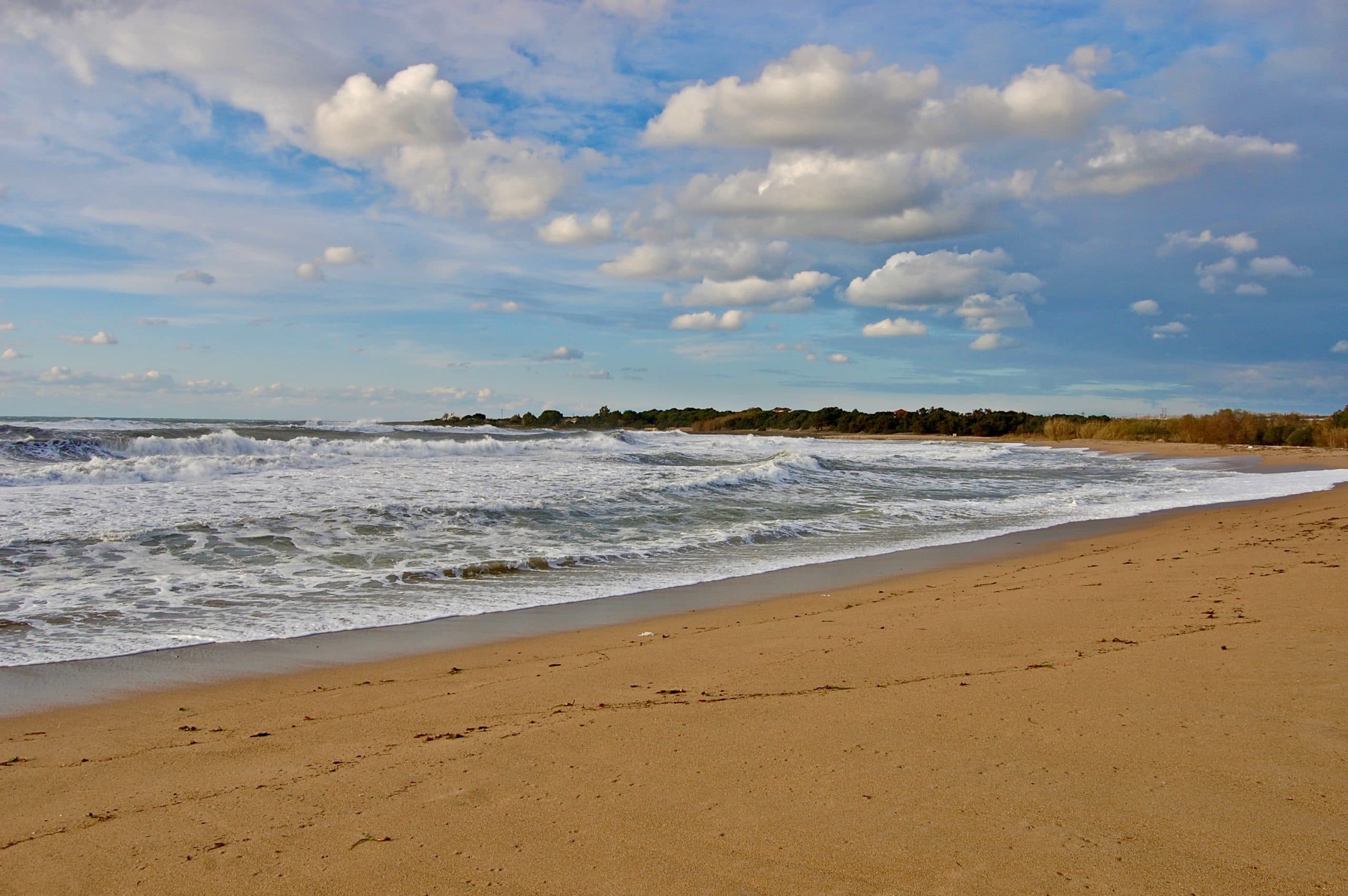
The lineup is still empty
The western Peloponnese has the wave, the coast, the infrastructure, and the momentum. What it doesn't have — yet — is the crowd. That window won't stay open.